At a high-profile symposium in New York City on October 22, 2025, Rev. Tony Suárez — vice president of the National Hispanic Christian Leadership Conference and a longtime adviser to Donald Trump — signaled a significant shift in how he wants faith leaders to engage with politics. Suárez, who publicly endorsed Trump in 2016 and says he has voted for Trump three times, announced that he likely will no longer offer personal endorsements of political candidates. Instead, he wants to move the conversation from personality-driven politics to substantive, policy-focused engagement.
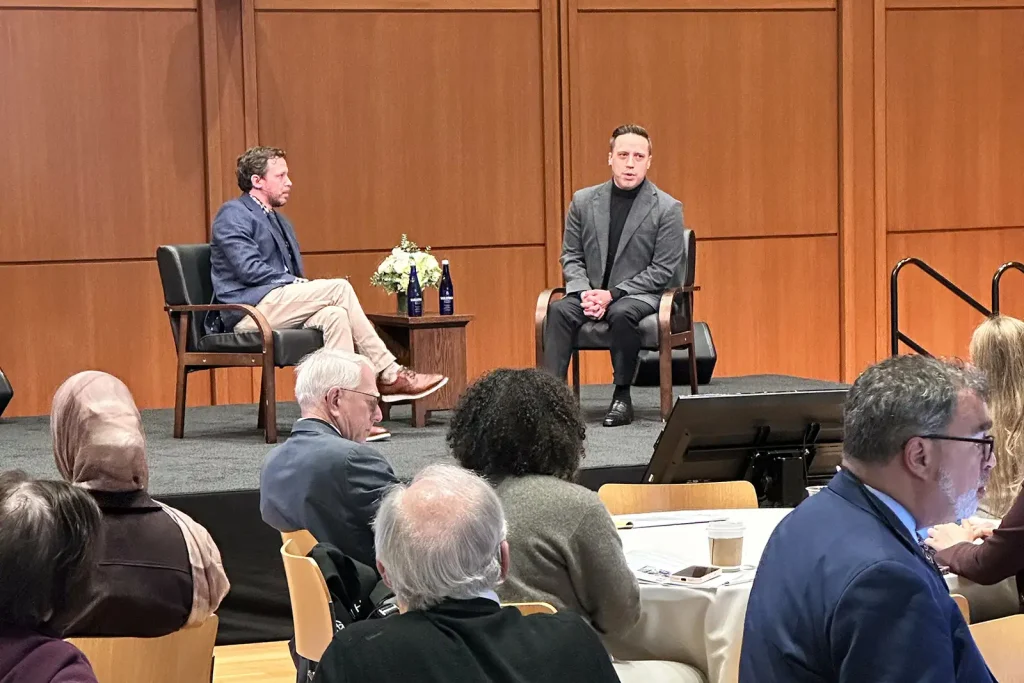
Suárez framed his stance as a call for clarity and principle over spectacle. “I don’t know that I’ll endorse any more candidates after this go-round,” he said, explaining that his preference is to discuss “concepts and ideas and policy” rather than personal loyalty or attacks. That distinction matters to him because, he argued, endorsing personalities has too often produced polarization within churches and within Hispanic faith communities.
A major part of Suárez’s frustration centers on immigration policy and the role of advisors and aides who shape it. He singled out one influential policy figure as responsible for fostering fear among immigrant congregations, while differentiating that adviser’s approach from the president’s personal stance. Suárez insisted he holds specific key aides accountable for certain enforcement policies and said he believes President Trump has indicated privately that he would support immigration reform. That belief underpins Suárez’s broader critique: he wants politicians held accountable for policy outcomes, not merely praised or condemned for style or rhetoric.
Suárez’s comments also reflected a willingness to confront criticisms from both left and right. He acknowledged backlash he experienced after his earlier political endorsements, including being pushed out of some interfaith organizing spaces and losing personal contacts who disagreed with his choices. “People that used to take my phone calls all of a sudden unfollowed. They wouldn’t answer the phone,” he said, describing his own experience of political isolation. At the same time, he criticized the fervent adulation of some conservative factions that elevate political figures to near-messianic status. “It becomes borderline idolatry and I can’t participate in it,” he noted, distancing himself from personalities elevated beyond accountability.
The pastor also used the forum to defend the presence of Hispanic conservatives in American politics, challenging the assumption that conservative faith positions are purely a product of white Christian nationalism. “You can’t call me a white Christian nationalist,” he said. “Call me a Hispanic Christian nationalist, but let’s have a conversation of how that happened.” Suárez pressed interlocutors to recognize that disappointment with past Democratic promises on immigration helped push many Hispanic voters into conservative coalitions. “We thought Democrats would take care of it, and then they did nothing when they were in power,” he said, summarizing why immigration remains a decisive issue for him.
Suárez repeated a familiar complaint about Democratic inaction on immigration reform, while also pointing to past administrations’ deportation records as part of the reason Latino voters feel politically betrayed. These comments reflect a broader, pragmatic calculation: when parties fail to deliver on a single high-stakes issue like immigration, supporters may shift allegiance not out of ideological affinity but out of frustration.
During the panel, Suárez identified himself unapologetically as a “seven-mountain believing, prosperity-preaching, rapture-seeking Pentecostal preacher,” a theological label that situates him within a particular stream of evangelical activism that aims for influence across sectors of society. Yet even from that posture, he resisted easy labels and urged nuance: Hispanic conservatives should not be dismissed as mere proxies of white political movements. He voiced a desire for renewed compassion within conservative politics: “I’m praying that there would be a revival of compassionate conservatism that would care about the poor… and care about the immigrant.”
Not everyone in the room agreed with his perspective. Critics pressed him on the human costs of aggressive enforcement and the experiences of clergy and activists who faced harsh treatment during immigration protests. Suárez responded that his own activism has included arrests for immigration reform in the past, but he conceded he’s not as involved in street-level protests as he once was. Instead, he defended a strategy of meeting with powerholders as a necessary route to influence: “If you’re going to have influence, you have to meet with the people that are in power.”
Suárez’s pivot away from candidate endorsements toward policy-centered advocacy raises practical and symbolic questions for faith leaders who have long mixed ministry and politics. By urging ministers to be “policy-focused” rather than “personality-driven,” he is asking religious voices to shift from electoral cheerleading to sustained policy engagement — a move that would, if widely adopted, alter how religious organizations interact with the political sphere.
His stance also touches on an undercurrent in contemporary American religion: frustration with performative politics and an appetite for tangible results on issues like immigration, poverty, and social cohesion. Whether other influential clergy follow Suárez’s lead remains to be seen, but his public recalibration signals a broader restlessness within faith-based political advocacy.
Ultimately, Suárez’s message is both tactical and moral. He is telling fellow pastors and political advisers that faith communities should be judged by the policies they help bring about — not simply by which candidates they bless. If more religious leaders adopt that posture, American faith politics could tilt from partisan endorsement to a more argument-driven, policy-first engagement — exactly the kind of change Suárez says he hopes to see.