Before ascending to the papacy as Pope Leo XIV, Robert Prevost’s formative years as a young Augustinian priest in Peru laid the foundation for his vision of a renewed, participatory church deeply rooted in the principles of Vatican II. His early ministry in the prelature of Chulucanas and later in the coastal city of Trujillo exemplified a pastoral model shaped by synodality, lay leadership, and a profound commitment to social mission—elements that would define his ecclesial approach throughout his career.
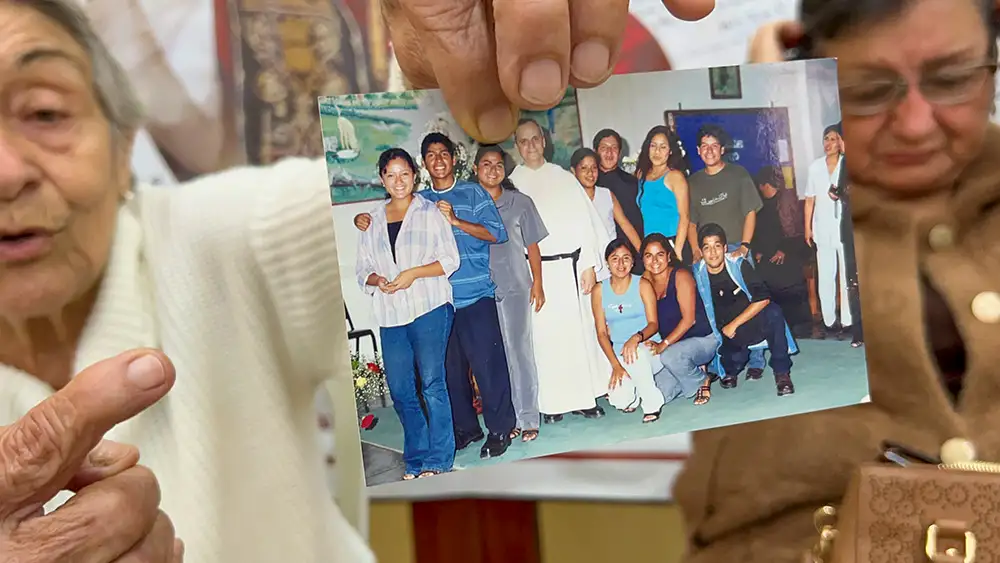
In 1985, at just 30 years old and only three years into his priesthood, Prevost arrived in Chulucanas, a largely rural and impoverished region. The prelature, established in the mid-1960s by Augustinians from the United States, had been developing a pioneering pastoral framework inspired by the Second Vatican Council (1962-1965) and subsequent Latin American bishops’ conferences, most notably the 1968 Medellín assembly. These gatherings emphasized the importance of ecclesial base communities—small, locally led Christian groups—as the fundamental units of the church, prioritizing the formation of lay leaders alongside clergy.
Prevost’s mentor, Bishop John McNabb, who became prelate of Chulucanas in 1964, was instrumental in translating Vatican II’s vision into concrete pastoral strategies. Despite initial doubts about the feasibility of evangelizing such a vast and challenging territory, McNabb pressed forward with a “New Image of Parish” plan. This initiative sought to decentralize parish life by dividing parishes into zones, each led by elected lay ministers responsible for liturgy, catechesis, social services, and youth activities. This model fostered inclusivity, making every baptized person an active participant in parish life.
During his brief but impactful tenure in Chulucanas, Prevost served as chancellor and pastoral collaborator, assisting McNabb in administrative duties and immersing himself in the grassroots pastoral model. Parishioners remember him affectionately as “Father Robertito,” a humble and approachable priest who frequently visited remote villages inaccessible to others. His pastoral style was marked by simplicity, openness, and a genuine presence among the poor and marginalized. Prevost’s work went beyond administrative tasks; he formed young altar servers, nurtured local leadership, and embodied the church’s preferential option for the poor amid the region’s severe economic hardships and natural disasters.
After a decade in Chulucanas and a period back in the United States, Prevost returned to Peru in 1988, this time to Trujillo, a bustling coastal city with a population nearing 700,000. There, he took on multiple roles: formation master at the Augustinian seminary, pastoral leader of a poor parish, and from 1992, parochial administrator of Our Lady of Montserrat Parish. Trujillo presented new challenges, including a fragmented community in the Monserrate neighborhood without a stable parish or church building.
Responding to the community’s request for pastoral care, Prevost and the Augustinians embraced the participatory parish model he had learned in Chulucanas. They divided the parish into sixteen zones, each with elected leadership fostering localized community life. Masses were initially held outdoors in parks and streets, with families bringing their own chairs and sharing information weekly about service locations. Monthly “fraternity parties” combined liturgy, assemblies, and social gatherings, strengthening bonds among parishioners.
This grassroots approach transformed parishioners into active partners rather than passive recipients. The model encouraged mutual aid, collective responsibility, and shared spiritual growth. When members faced illness or financial hardship, the community mobilized support; when someone died, neighbors gathered for prayer and consolation. Each neighborhood zone celebrated its patron saint’s feast day, drawing the entire parish into joyful communal worship.
Prevost’s leadership style in Trujillo mirrored his earlier approach: gentle, calm, and relational. Parishioners recall a priest who was not distant or authoritarian but a true companion, engaging with people in their homes, listening attentively, and fostering friendship. His openness and humility helped build trust and empowered ordinary Catholics to recognize themselves as the church.
The pastoral vision forged in Peru during these years reflects the core spirit of Vatican II’s call for a synodal church—one that listens, includes, and walks together. Prevost’s experience in Chulucanas and Trujillo became a living laboratory for this ecclesial renewal, demonstrating the transformative power of lay leadership and community-based ministry. This foundation deeply influenced his later ministry as bishop and, ultimately, as pope.
Today, the communities that once welcomed “Father Robertito” celebrate his election as Pope Leo XIV with pride and hope. His early mission in Peru stands as a testament to how Vatican II’s renewal efforts took root in concrete pastoral realities, shaping a church that is more participatory, humble, and attentive to the needs of the poor. The legacy of that time continues to inspire the global church’s ongoing journey toward synodality and authentic community life.