Diwali, also known as Deepavali, is one of the most widely celebrated festivals in the Hindu calendar, spanning five days of vibrant rituals, joyous gatherings, and spiritual reflection. It symbolizes the eternal victory of light over darkness, knowledge over ignorance, and good over evil. While its origins are intertwined with diverse legends, the festival universally represents hope, renewal, and the promise of prosperity as the new year begins.
The roots of Diwali are multifaceted and vary among communities. In many regions, it commemorates the return of Lord Rama, an avatar of Vishnu, to his kingdom after a fourteen-year exile and his victory over the demon king Ravana. His reunion with his wife, Sita, is celebrated with illumination and festivity, symbolizing the restoration of righteousness. Other traditions associate Diwali with the goddess Lakshmi, the embodiment of wealth and fortune, marking her marriage to Vishnu and the blessings she brings to her devotees. Additionally, some observe Diwali as the triumph of the goddess Kali over evil forces, or celebrate Krishna’s defeat of demonic entities, highlighting the overarching theme of divine victories over darkness in various forms.
Despite the variations in myth and belief, the festival is unified in its core purpose: to honor goodness, light, and truth while ushering in a new beginning. It serves as a reminder that, in the enduring struggle between good and evil, benevolence will ultimately prevail. This spiritual ethos is reflected in both the rituals performed and the personal conduct of those celebrating the festival.
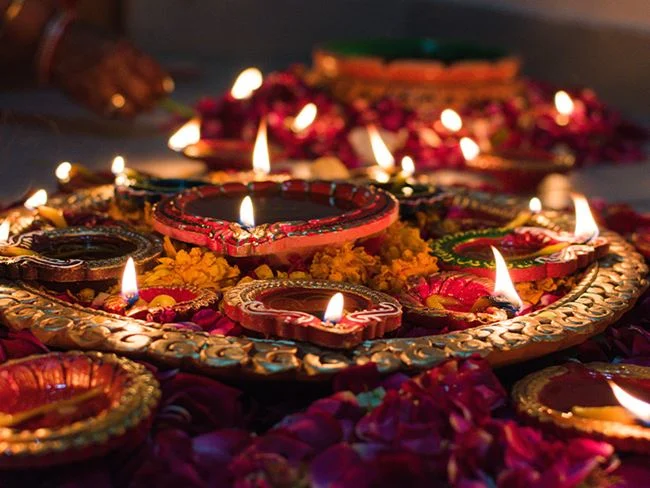
Preparations for Diwali begin well before the festival itself. Homes are meticulously cleaned, symbolizing the purging of negativity, and decorated with oil lamps, candles, and colorful rangoli patterns. Devotees engage in puja, offering prayers to deities such as Lakshmi and Ganesha, the elephant-headed god of wisdom and remover of obstacles. These rituals are believed to attract prosperity, knowledge, and blessings for the coming year. The festival is also a time for social bonding: families prepare special meals, share sweets, exchange gifts, and don new clothing, fostering a sense of unity and renewal. Many households also display small altars or sacred corners dedicated to the deities, where offerings of fruits, flowers, and coins are placed in a ceremonial fashion, deepening the spiritual atmosphere of the celebration.
For businesses, Diwali signifies the end of the fiscal year, a period to settle accounts and start anew, echoing the broader theme of cleansing and fresh beginnings. In public celebrations, streets and homes sparkle with thousands of lamps, fireworks light up the night sky, and fairs and cultural performances fill communities with joy. Dramatic enactments, including the burning of effigies of Ravana, recall mythological victories and reinforce moral and ethical lessons in a celebratory context. Children eagerly participate in lighting firecrackers and performing small plays, passing down stories of virtue and courage that form an essential part of the festival’s legacy.
The timing of Diwali, determined by the lunisolar Hindu calendar, varies each year but typically falls between October and November. The festival’s central day coincides with the darkest night of the month, symbolically representing the illumination of darkness by divine and human goodness. Observances blend spiritual devotion with cultural expression, emphasizing introspection alongside communal festivity. Many devotees also undertake acts of charity during this period, donating food, clothing, and resources to the less fortunate, further reinforcing the principles of dharma and social responsibility.
Diwali also serves as a cultural bridge, connecting different communities and generations. In multicultural societies and countries with Indian diasporas, Diwali is often celebrated publicly with festivals, parades, and cultural exhibitions. These events showcase traditional music, dance, attire, and culinary delights, offering an opportunity for cross-cultural understanding and appreciation. It demonstrates how spiritual traditions can inspire shared human values, such as generosity, resilience, and hope, regardless of faith background.
At its heart, Diwali represents more than just religious observance; it encapsulates fundamental human values. It celebrates the triumph of virtue over vice, the rewards of perseverance, and the blessings of generosity and kindness. Through its rituals, stories, and communal practices, Diwali harmonizes a wide spectrum of beliefs, philosophies, and legends into a cohesive celebration of life’s ultimate truths. The festival’s enduring appeal lies in its ability to inspire hope, strengthen social bonds, and cultivate a sense of spiritual renewal across generations.
Diwali’s beauty lies not only in its visual spectacle but also in its profound moral and spiritual significance. It reminds individuals to seek light in times of darkness, to act with integrity, and to cherish the connections that sustain communities. The festival continues to captivate millions, offering a timeless message: that goodness, illuminated through devotion and righteous action, will always shine brighter than the shadows of ignorance and adversity. In modern contexts, Diwali is increasingly celebrated globally, highlighting the richness of Hindu traditions while promoting values that resonate universally. Its lights, colors, and joyous spirit serve as an annual reminder that hope, faith, and communal harmony are timeless treasures in human life.