D. T. Suzuki, born Teitaro Suzuki on October 18, 1870, stands as a towering figure in the transmission and transformation of Zen Buddhism from its East Asian roots to the Western world. Known widely by his dharma name, Daisetsu, bestowed by his teacher Soen Shaku, Suzuki’s influence extends far beyond his prolific writings; he fundamentally shaped how Zen is understood and practiced in the West today.
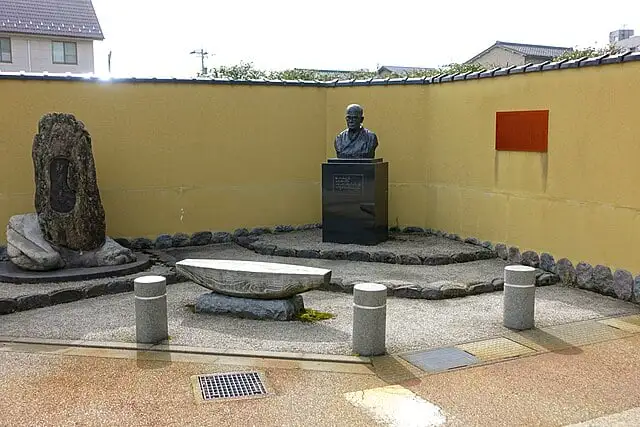
Suzuki’s life spanned nearly a century, ending in 1966 at the age of 95. Throughout his long career, he became the principal conduit through which Japanese Zen Buddhism entered Western intellectual and spiritual circles. It is largely due to Suzuki that the term “Zen” — the Japanese pronunciation of the Chinese “Chan” — became the dominant label for this meditative tradition outside Asia. His timing was impeccable: the early 20th century saw a growing Western curiosity about Eastern spirituality, and Suzuki’s approach made Zen accessible without heavy reliance on historical or doctrinal complexity.
Suzuki’s relationship with Soen Shaku was pivotal. When Soen attended the 1893 World Parliament of Religions in Chicago, he was invited by the scholar Paul Carus to remain in the United States to help translate and disseminate Buddhist texts. Declining himself, Soen recommended Suzuki, who then moved to Illinois and joined the Carus household. There, Suzuki assisted in translating key texts such as the Dao de Ching, a foundational work for understanding East Asian philosophy, despite it not being Buddhist in origin. He also collaborated on “Outlines of Mahayana Buddhism,” a seminal text that introduced Mahayana Buddhist concepts to Western readers. During this period, Suzuki married Beatrice Erskine Lane, further cementing his cross-cultural ties.
Returning to Japan, Suzuki took up a professorship at Otani University and engaged with prominent Buddhist philosophers, including Shinichi Hisamatsu, connecting indirectly with the Kyoto School. Yet, his career was truly international. Suzuki lectured extensively throughout North America and Europe, becoming a sought-after voice on Zen. He authored over a hundred books, many focusing on Zen’s experiential and non-historical aspects, which resonated deeply with Western audiences seeking spiritual insight beyond rigid dogma.
Suzuki’s influence permeated various fields and personalities. His ideas reached Catholic mystic and peace activist Thomas Merton, psychologists such as Erich Fromm, Karen Horney, and Carl Jung, avant-garde musicians like John Cage, and poets including Gary Snyder and Allen Ginsberg. Perhaps most notably, Alan Watts popularized Suzuki’s interpretations, bringing Zen into mainstream English-speaking culture with a vibrancy and accessibility that few others matched. Through Watts and others, Suzuki’s vision of Zen exploded into public consciousness, profoundly shaping Western spirituality.
Despite his monumental contributions, Suzuki’s legacy is not without controversy. Accusations of his support for Japanese imperialism have been raised, though some argue these claims oversimplify or misinterpret his views. More enduringly, critiques focus on Suzuki’s portrayal of Zen itself. His presentation often leaned toward a romanticized, idealist interpretation, emphasizing Zen’s timeless, experiential essence while downplaying historical and cultural complexities. This framing both enriched Zen’s appeal in the West and imposed limitations, creating a somewhat sanitized version that later scholars and teachers have had to reassess and sometimes challenge.
From a contemporary perspective, Suzuki can be seen as a modernist Buddhist—someone who adapted traditional teachings to fit the intellectual and cultural currents of his time. His scholarship was rigorous, and his translations and writings remain foundational. Yet, his work also reflects the tensions inherent in transmitting a deeply rooted Asian spiritual tradition into a radically different Western context.
Without D. T. Suzuki, it is difficult to imagine the shape Zen Buddhism would take in the West today. His efforts laid the groundwork for the widespread appreciation and practice of Zen meditation and philosophy outside Asia. The very word “Zen” itself, now globally recognized, owes its Western prominence to Suzuki’s pioneering role.
In his final moments, Suzuki reportedly said, “Don’t worry. Thank you! Thank you!”—words that encapsulate the humility and grace with which he approached his life’s work. For those who have encountered Zen through his writings and teachings, the gratitude is immense. Suzuki’s legacy endures, a bridge between East and West, tradition and modernity, history and awakening.